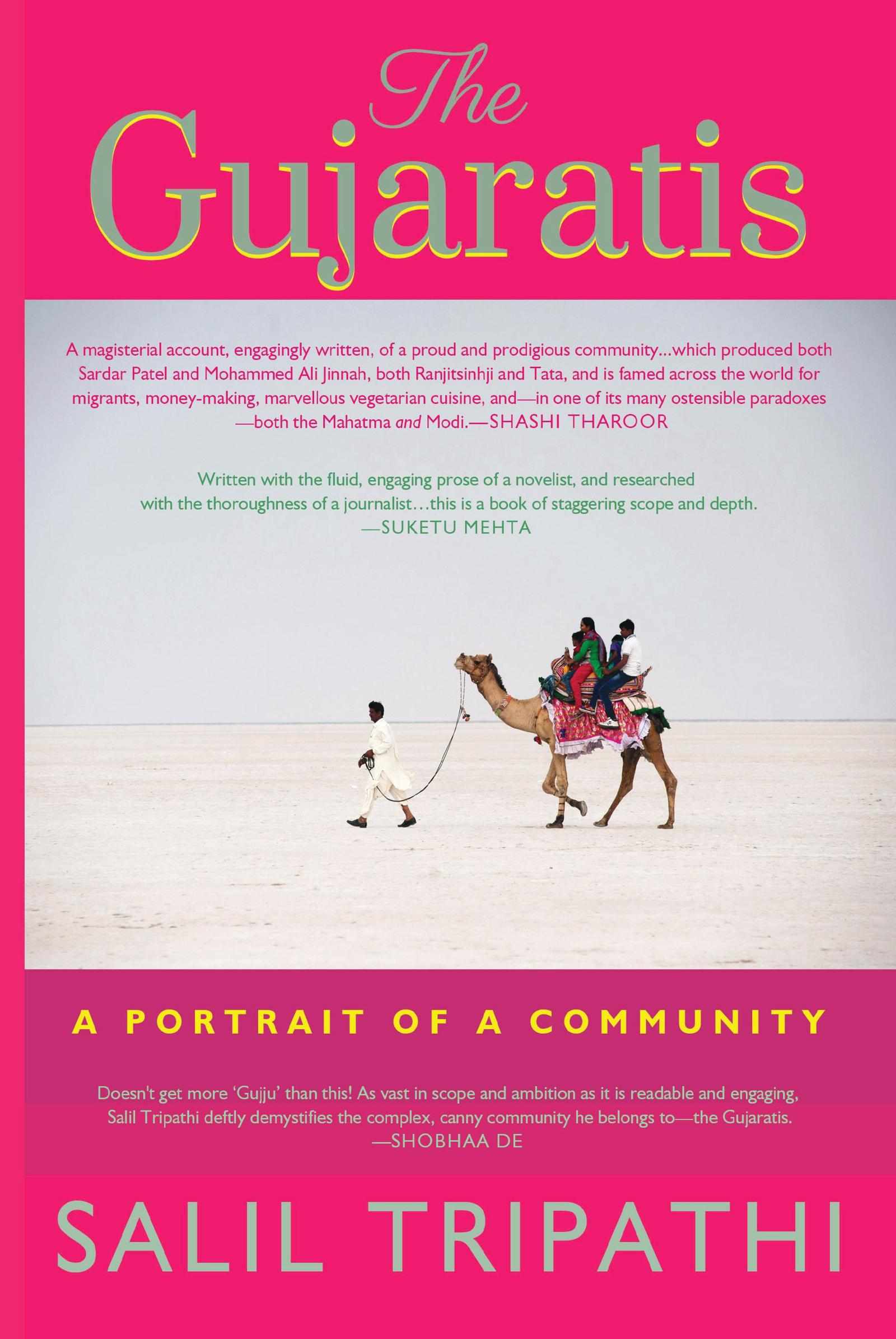
The Gujaratis
About This Book
What you will read in the pages that follow is what I have learned about Gujaratis, from conversations with Gujaratis and people who care about Gujarati society and culture across the world. I am Gujarati, and mine is an individual interpretation of who we are and why we are the way we are. This is not meant to be an encyclopedia. I take an expansionist definition of who a Gujarati is: the one who speaks the language, possibly counts in it, dreams in it, and thinks in it; the one who has moved to the land where Gujarati is spoken by the majority; the ones who may speak other languages but have made Gujarat their home and preserve their minority identities; and the ones who may live anywhere else in the world, but are of Gujarati heritage. Gujarati is a language, not a religion, nor a caste, so the Gujaratis you will meet in these pages belong to all the strata of the society, and include Hindus, Muslims, Parsis, Jains, Buddhists, Dalits, Christians, and others who identify with other ethnicities and may be of no faith. To research the book, I made seven extended visits to Gujarat between 2015 and 2018. But I have also drawn from my memories of growing up in a Gujarati home, attending a Gujarati-medium school, and meeting Gujaratis in many parts of the world over many decades. Some encounters occurred many years ago; some were more recent. Over the years, my work has taken me to more than sixty countries, and Gujaratis live on all continents. I have mined those memories, of my conversations with Gujaratis in or from New Zealand, Hong Kong, Singapore, Malaysia, Myanmar, Pakistan, Oman, the United Arab Emirates, Kenya, Uganda, Tanzania, South Africa, Belgium, Switzerland, the United Kingdom, the United States, and Canada, besides, indeed, in India, where the bulk of Gujaratis live.
Details
- Author
- SALIL TRIPATHI
- Publisher
- West Side Press
- Published date
- 1 Jul, 2026
- Language
- English
- ISBN
- 978-81-982193-9-8
- Type
- Paperback
- Cover finish
- Matte
- Interior
- Standard Black & White
- Dimensions
- 6 in - 9 in
- Pages
- 744 Pages